The Weed You Were Taught to Avoid… Might Be the One You Need
Reading time: 4 minutes
There are certain things you were taught growing up that you never questioned.
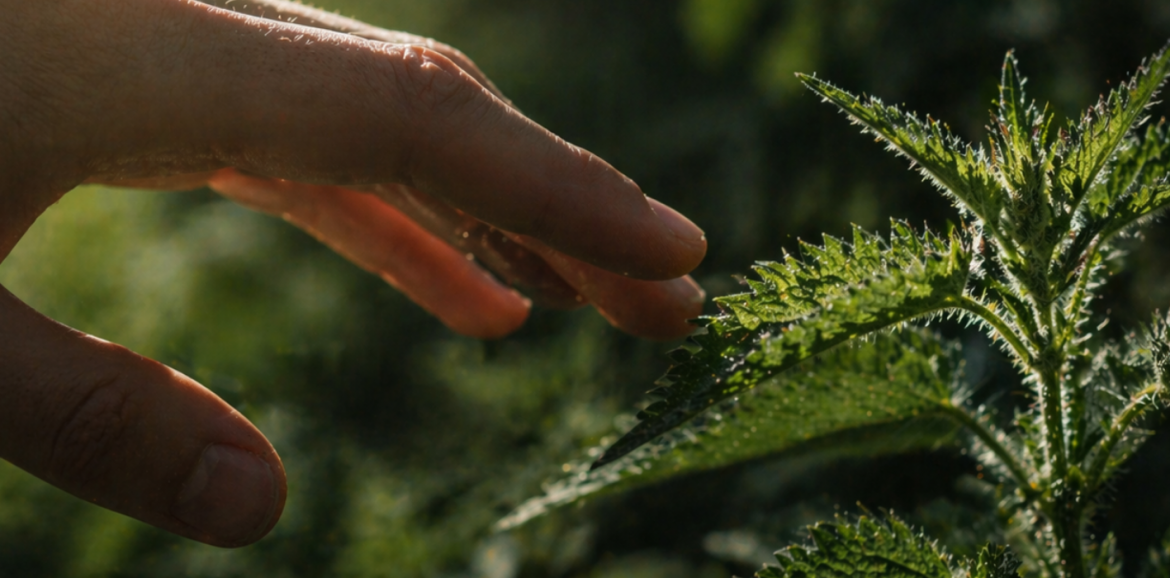
Nettles sting.
So you avoid them.
But what if that reaction, that instinct, is exactly what’s keeping you away from something your body actually needs? Because stinging nettle isn’t just a plant. It’s a reminder that not everything uncomfortable is harmful.
Sometimes… it’s useful.
What Is Stinging Nettle?
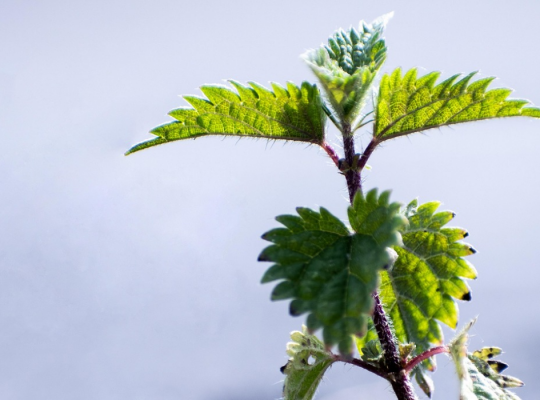
Stinging nettle (Urtica dioica) is a wild plant used for centuries in traditional medicine across Europe, Asia, and North America.
The sting comes from tiny hair-like structures called trichomes, which inject compounds like histamine and formic acid into the skin.
But once the plant is:
- cooked
- dried
- or steeped
…the sting disappears.
And what remains is something very different:
A nutrient-dense plant with both traditional use and emerging scientific interest.
Nutritional Value: Why It’s Not “Just a Weed”
Nettle is often described as a “wild green” — and that’s a more accurate way to think about it than a supplement.
It contains:
- Vitamin A, C, and K
- Calcium and magnesium
- Polyphenols and plant compounds
USDA data shows nettle can be particularly high in calcium compared to common greens, although nutrient values vary depending on preparation. The key takeaway isn’t that it “beats” other foods. It’s that:
It adds diversity and density to your nutrition — something modern diets often lack.
What Nettle May Support (Evidence + Reality)
Let’s separate what’s promising from what’s proven.
1. Inflammation & Joint Comfort
Nettle has been traditionally used for joint discomfort and minor inflammatory conditions.
- European Medicines Agency (EMA) recognises nettle leaf/herb for traditional use in minor joint pain
- Some small studies suggest potential effects on inflammatory pathways
Reality:
It may support inflammation — but it’s not a cure or replacement for medical treatment.
2. Seasonal Allergies (Hay Fever)
Nettle is often described as a “natural antihistamine.”
- A small double-blind study (1990) showed some improvement in allergic rhinitis symptoms
- However, major reviews (NCCIH) state evidence is limited and inconsistent
Reality:
It may help some people — but results vary.
3. Urinary & Kidney Support
Traditionally used as a mild diuretic, nettle leaf may help:
- increase urine output
- support urinary tract “flushing”
This is recognised in European herbal monographs.
Reality:
Supportive — not a treatment for serious conditions.
4. Prostate Health (Nettle Root)
Important distinction:
- Nettle leaf → general wellness
- Nettle root → studied for prostate support (BPH)
Clinical trials suggest nettle root may improve symptoms of benign prostatic hyperplasia (BPH).
Reality:
This is one of the stronger evidence areas — but still supportive, not curative.
5. Blood Pressure (Use Caution Here)
You’ll often see claims that nettle lowers blood pressure.
- Some lab and animal studies suggest this
- Human evidence is limited
Reality:
It may support cardiovascular health —
but should never replace prescribed medication
The Real Insight (Beyond the Stinging Nettle Benefits)
Nettle is not powerful because it “fixes everything. It’s powerful because it represents something we’ve lost:
Simple, natural support for the body.
Not force.
No extremes.
No shortcuts.
Just support.
How to Use Nettle Safely
Keep this simple:
Nettle Tea
- Dried leaves
- Steep 5–10 minutes
- Easiest entry point
Cooked Nettle
- Use like spinach
- Soups, stews, pesto
Supplements
- Capsules or tinctures
- More concentrated
Important:
- Always avoid handling raw nettle without gloves
- Ensure you consult a professional if you are pregnant or are on medication
- Be cautious with blood pressure or diuretic medications
The Holistic Takeaway
The next time you see a nettle…pause.
Because what looks like something to avoid might actually be something to understand. Remember, that shift, more than the plant itself, is where real health begins.
References
Evidence-Based & Trusted Sources
- National Center for Complementary and Integrative Health (NCCIH)
https://www.nccih.nih.gov/health/seasonal-allergies-at-a-glance - NCCIH – Benign Prostatic Hyperplasia & Integrative Approaches
https://www.nccih.nih.gov/health/providers/digest/benign-prostatic-hyperplasia-and-complementary-and-integrative-approaches-science - European Medicines Agency (EMA) – Herbal Monographs
https://www.ema.europa.eu - EMA – Nettle Leaf (Urticae folium)
https://www.ema.europa.eu/en/documents/herbal-monograph - Memorial Sloan Kettering Cancer Center – Nettle
https://www.mskcc.org/cancer-care/integrative-medicine/herbs/nettle - USDA FoodData Central (Nutritional Data)
https://fdc.nal.usda.gov - Randall et al. (2000) – Nettle and Osteoarthritis Pain Study
https://europepmc.org/articles/PMC1298033/ - Mittman (1990) – Nettle for Allergic Rhinitis
https://europepmc.org/abstract/MED/2192379